Dissertation Plagiarism Check: How to Stay Safe
Plagiarism in academic work is one of the most serious offenses in the German university system. High-profile cases — from politicians to professors — have shown that even years after graduation, a dissertation can be scrutinized and a doctoral title revoked if plagiarism is found. This isn't about intent: whether you copied deliberately or simply forgot to put quotation marks around a passage you borrowed, the consequences can be devastating. The good news is that protecting yourself is straightforward. Running a plagiarism check on your own dissertation before submission is one of the smartest things you can do. It catches accidental oversights, gives you peace of mind, and ensures that your years of hard work aren't tainted by careless mistakes.
Why You Should Check for Plagiarism
You might think that since you wrote every word yourself, there's no way your dissertation could contain plagiarism. But plagiarism isn't just about copying someone else's text wholesale. It includes paraphrasing too closely without citation, failing to attribute ideas to their original source, reusing your own previously published text without disclosure, and even inconsistent citation practices that make it unclear which ideas are yours and which come from the literature. Over the course of a multi-year project involving hundreds of sources, it's almost inevitable that some attribution will slip through the cracks. A plagiarism check before submission catches these issues while they're still fixable. Many German universities now routinely run dissertations through plagiarism detection software before or after the defense. If the university finds problems that you didn't catch yourself, the consequences are far worse than if you'd identified and corrected them proactively.
How Plagiarism Detection Software Works
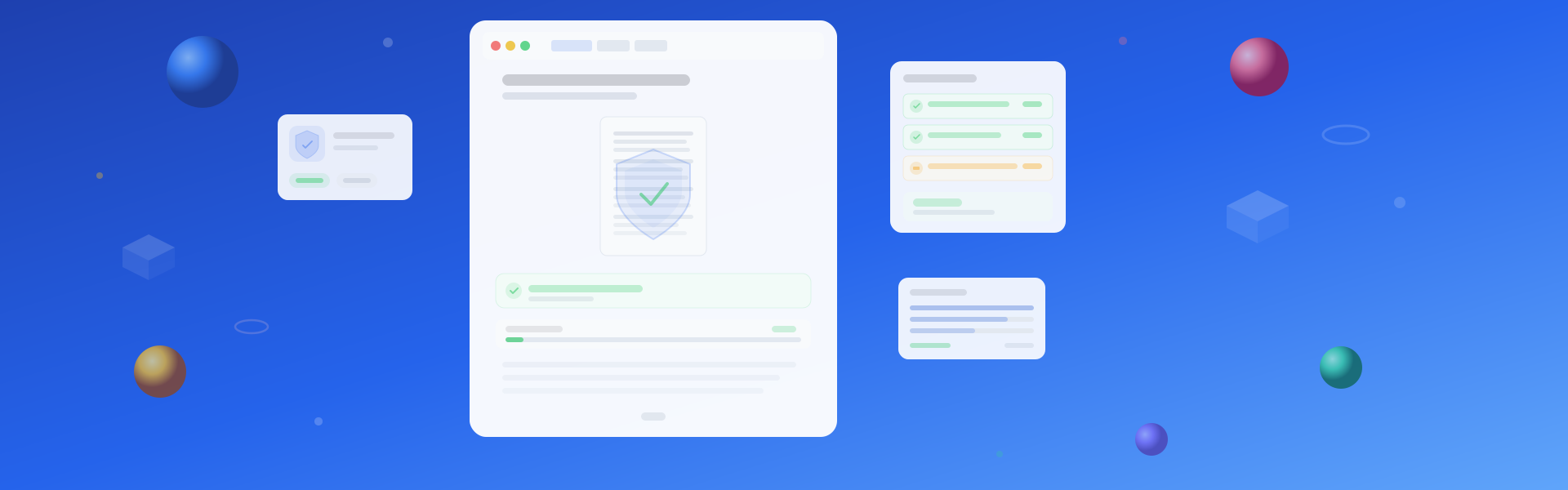
Plagiarism detection tools work by comparing your text against massive databases of published works, websites, and previously submitted documents. They identify passages in your text that match or closely resemble existing sources and generate a similarity report highlighting these passages. It's important to understand that a similarity score doesn't automatically equal plagiarism. Properly cited quotations, common phrases, technical terminology, and your own bibliographic entries will all show up as "matches." What matters is whether the matched passages are properly attributed. A well-cited dissertation might have a similarity score of 15–25% and still be completely clean, while a dissertation with a 5% score could contain actual plagiarism if those matches are unattributed. The key is to review the similarity report carefully and verify that every matched passage is either properly cited or consists of common language that doesn't require attribution.
Tools and Services
Several plagiarism detection tools are commonly used in German academia. Turnitin is probably the most well-known globally and is used by many German universities institutionally. PlagScan (now Ouriginal) is a German-developed tool popular with European universities. iThenticate is specifically designed for research manuscripts and dissertations. Some universities provide free access to these tools for their doctoral students — check with your library or graduate school before paying for a subscription. If your university doesn't offer access, you can use commercial services directly. Expect to pay between €20 and €100 for a single document check, depending on the service and the length of your document. Some proofreading services also include a plagiarism check as an add-on. When using any tool, make sure it supports your dissertation's language and has a sufficiently large database of German-language academic sources. A tool that only checks against English-language publications won't be very useful for a German-language dissertation.
Prevention Is the Best Protection
The best way to avoid plagiarism issues is to develop good citation habits from day one of your PhD. Use a reference manager like Zotero, Citavi, or EndNote to keep track of every source you consult. When in doubt, cite. And before you submit your final manuscript, run it through a plagiarism detection tool and review the results carefully. A few hours of checking can protect years of work and a lifetime of professional reputation. Your dissertation should stand as a testament to your original thinking — make sure it does.